
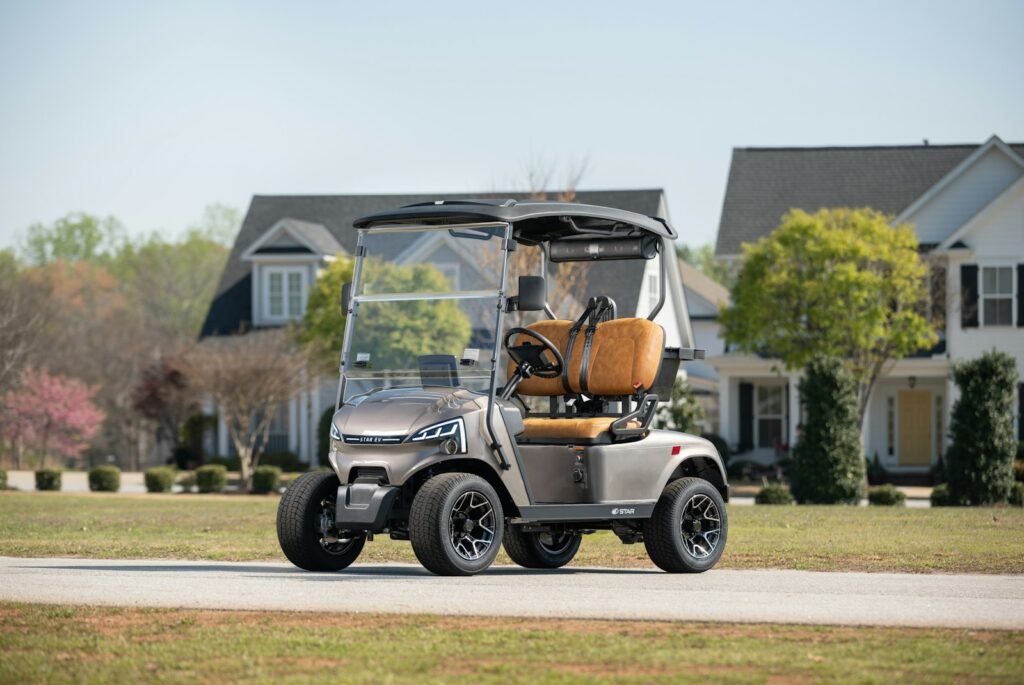
Golf carts aren’t just for the course anymore. Across Long Island, families use them for beach runs, trips to the marina, rides around the block with the kids, and quick hops to a neighbor’s barbecue. Businesses use them to move guests, staff and gear around campuses, resorts and waterfront properties.
Key takeaways
- A 4-passenger lithium cart fits most Long Island families.
- Public roads require a registered, insured LSV, and your village or town has to allow it.
- Lifted models handle sandy lots and gravel driveways better.
If you’re buying your first cart, the choices can feel overwhelming: gas or electric, two seats or six, lifted or standard, golf cart or street-legal LSV. This guide breaks it down in plain English so you can pick the right cart for how you’ll actually use it.
Start With How You’ll Use It
Before you look at models, answer three questions.
Where will you drive? Private roads, a gated community, a marina or your own property is golf cart territory. If you want to drive on public streets, you’ll need a street-legal low-speed vehicle (LSV), not a standard golf cart. More on that below.
Who’s riding? Count your household plus the friends who always tag along. Most Long Island families land on four seats.
Where will you park it? Measure your garage or shed. A 6-passenger cart is noticeably longer than a 4-seater, and you’ll want room to plug in an electric cart.
Golf Cart vs. Street-Legal LSV: Know the Difference
This is the most important decision for neighborhood use, and the one buyers most often get wrong.
A standard golf cart is built for paths, private roads and property use. A low-speed vehicle (LSV) is a different class of vehicle under federal law. Federal Motor Vehicle Safety Standard No. 500 caps LSVs at 25 mph and requires equipment such as headlights, turn signals, mirrors, a parking brake, a DOT windshield, a VIN and a seat belt at every seat. You can read the standard in the Electronic Code of Federal Regulations (49 CFR 571.500).
New York defines an LSV in Vehicle and Traffic Law § 121-f as a vehicle with a top speed above 20 mph and no more than 25 mph that meets that federal standard. If you plan to drive on public roads, the vehicle has to be a compliant LSV, and you’ll need to handle registration and insurance through the New York DMV.
One Long Island tip: villages and towns set their own rules about where carts and LSVs can go, so check with your village or town before you buy. Rules in Long Beach can differ from those in Montauk or a Nassau County HOA.
For more detail, read our guide: Are Golf Carts Street Legal in New York?

Electric vs. Gas: Which Fits Long Island Living?
Electric: the neighborhood favorite
For most Long Island neighborhoods, electric is the easy pick.
- Quiet. No engine noise, which matters on tight streets and early beach mornings.
- No fumes or fuel. Plug in overnight and go.
- Low maintenance. No oil changes, spark plugs or filters.
- Short trips are its sweet spot. Neighborhood driving rarely comes close to a full charge’s range.
Gas: for long days and big properties
Gas carts make sense if you cover a lot of ground in a day, have a large property, or don’t have easy access to an outlet. You refuel in minutes, and power stays steady on hills. For example, ICON’s 2025 G40 uses a 401cc fuel-injected engine rated at 13.5 HP, according to ICON. The trade-off is more upkeep and engine noise.
Read the full comparison: Gas vs. Electric Golf Carts
Why Lithium Batteries Are Worth It
If you go electric, the battery is the biggest decision after seat count. Most new carts now use lithium iron phosphate (LiFePO4) instead of traditional lead-acid.
Battery University rates LiFePO4 at 2,000 or more charge cycles and calls it one of the most thermally stable lithium chemistries. Deep-cycle lead-acid batteries typically last a few hundred cycles, take many hours to charge and need regular watering, per Battery University.
For a Long Island owner, that means:
- No watering or acid checks
- A lighter cart with more usable energy
- Far longer battery life, which usually makes lithium cheaper over the life of the cart
Winter tip: Long Island winters get cold. Store your cart in a garage when you can, and follow the manufacturer’s guidance on charging in freezing temperatures. Battery University explains why in its guide to charging at high and low temperatures.
Learn more: Lithium vs. Lead-Acid Golf Cart Batteries
Choosing the Right Size
2-passenger
Best for couples, golfers and tight garages. It’s the smallest footprint and usually the lowest price.
4-passenger (the Long Island sweet spot)
Two forward seats plus a rear seat, often a flip seat that folds into a cargo deck for beach chairs and coolers. Forward-facing models put everyone facing ahead, which many families prefer with kids aboard.
6-passenger
Great for bigger families, rental properties and businesses moving groups. Check your garage length and turning room first.
Lifted vs. standard
Lifted carts add ground clearance and bigger tires for sand-dusted roads, gravel driveways and grassy lots. Standard-height carts are easier to step into and ride smoother on pavement.
See our guide: How Many Seats Do You Need?
Top Picks for Long Island Neighborhoods
Here are carts we recommend for local use, with sale prices from our current inventory. Prices may change; check each listing for the latest.
Best value: ICON i40-ECO, $9,999. A 4-passenger lithium cart that gets you into a new cart with the essentials, at the lowest price in our lineup.
Best all-around family cart: ICON i40, $11,499. Four seats, lithium power, LED lights, seat belts and four-wheel hydraulic disc brakes. A solid choice for most neighborhoods.
Best for beach roads and rougher ground: ICON i40L (Lifted), $11,999. The same 4-seat setup with extra clearance for sandy lots and gravel.
Best tech package: EPIC E40FX, $12,995. A touchscreen with Apple CarPlay and Android Auto, a backup camera and Bluetooth speakers, in a 4-seat lithium cart.
Best for big families: ICON i60, $12,999. Six seats with lithium power, for families and rental homes that move a crowd.
Best gas option: ICON G40, $10,499. A fuel-injected 401cc engine for long days and big properties.
Best premium street-legal: Garia Street Legal (Via / Monaco), $21,995. A luxury two-seater built for road use, for buyers who want style and street legality.
Browse every model by brand: ICON, EPIC, Club Car, Edge EV and Garia.
Golf Carts for Long Island Businesses
Marinas, beach clubs, HOAs, campuses and event venues use carts to move guests, staff and supplies quickly and quietly. When buying for a business, look at:
- Seat count and cargo needs. A 6-passenger cart or a model with a rear cargo deck saves trips.
- Fleet consistency. Buying the same model across your fleet simplifies parts and service.
- Safety features. Seat belts, four-wheel disc brakes and good lighting protect guests and staff.
- Charging setup. Plan outlet locations before the carts arrive.
Contact us about multi-cart orders and fleet options.
Safety Basics for Families
Golf carts feel casual, but they’re still vehicles. A national study from Nationwide Children’s Hospital estimated about 148,000 golf cart injuries in the U.S. from 1990 to 2006, with more than 30% involving children under 16. A few habits make a big difference:
- Everyone stays seated, with hands and feet inside.
- Use seat belts and hip restraints.
- Only licensed, experienced drivers take the wheel.
- Slow down on turns, slopes and wet roads.
- Never carry more people than there are seats.
Read more: Golf Cart Safety Tips for Families

Long Island Ownership Tips
- Salt air: Rinse the cart after beach trips and park it under cover to limit corrosion.
- Winter storage: Store indoors when you can, and follow the battery maker’s storage guidance.
- Insurance: Ask your insurer about golf cart or LSV coverage, especially if you’ll use the cart off your property.
- Accessories: Rear seat kits, enclosures for cool spring and fall days, and storage add-ons make a cart more useful year-round.
FAQs
Can I drive a golf cart on Long Island roads?
A standard golf cart generally isn’t a road vehicle. For public roads, you need a compliant LSV that’s registered and insured, and your village or town must allow it. Always check local rules.
How fast do golf carts go?
Many new carts reach about 19 to 25 mph. Federal rules cap LSVs at 25 mph.
Is lithium worth the extra cost?
For most owners, yes. It lasts far longer, needs no watering and keeps the cart lighter.
What size cart is best for a family?
A 4-passenger cart fits most families. Choose 6 seats if you regularly carry more than four people.
Do you deliver on Long Island?
Yes. We offer clear pricing and delivery. Contact us for a quote to your address.
Find Your Cart
The best golf cart for your Long Island neighborhood is the one that fits how you live: where you drive, who rides with you and where you park. If you’re still deciding, we’re happy to help. Browse our full golf cart lineup or contact us, and we’ll point you to the right cart.
Ready to find your cart?
Browse new electric, gas and street-legal carts with clear pricing, or ask us a question and we’ll point you to the right model.
